


When we decided to move to France, one of my quiet anxieties was the unknown. Back in Texas, I know the drill — wild boars, venomous spiders, scorpions, snakes, tornadoes, hurricanes. I’ve got a playbook for all of it. But France? What hazards might be lurking here that I wouldn’t even think to Google?
Last week, I got my answer. And naturally, I’m passing it straight on to you.
Meet the Processionary Caterpillar
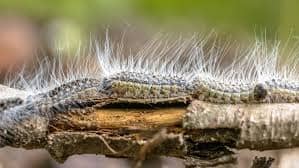
Every spring — typically from late February through April — these fuzzy little creatures make their grand entrance across France. They look almost unbearably cute. Don’t let that fool you.
Their soft, hair-like bristles are loaded with venom. Touch them and you risk skin irritation, rashes, and worse. Feel threatened? They eject their toxic hairs directly into the air, where the wind carries them to completely unsuspecting victims — through the air. 😨
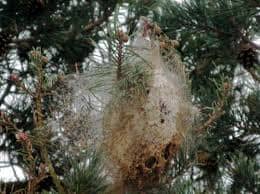
They start the season tucked inside silky, web-like nests high in trees. Once they exhaust the local food supply, they descend and march in a single-file line to find more — which is exactly where they get their name. One scientist reportedly placed a group nose-to-tail in a circle just to see what would happen. They marched in circles until they starved to death. Committed, if nothing else.
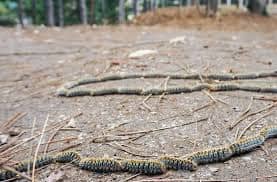
Spot a web-like clump in a tree? That’s their nest. See caterpillars marching in a line on the ground? That’s them. Keep your distance.
How Dangerous Are They?
It depends on who — or what — encounters them.
For Pets
This is where things get serious. Venom from the hairs causes pain, swelling, and rashes wherever they make contact. The mouth and tongue are especially vulnerable, and in severe cases, exposure can lead to necrosis. A small dog that ingests just three or four caterpillars can die. Making matters worse, processionary caterpillars give off a bittersweet scent that draws curious dogs and cats to sniff — which risks inhaling the hairs.
If you think your pet has been exposed:
- Rinse the affected area with water immediately — do not rub.
- Get to a vet right away.
For Adults
Contact with the hairs typically causes itching, swelling, and, if inhaled, respiratory symptoms. Reactions can include intense itching, burning rashes or wheals, difficulty breathing, and stomach pain or vomiting.
If you think you’ve been exposed:
- Rinse the area or take a cool shower immediately.
- Machine-wash any exposed clothing — don’t handle it with bare hands.
- Most reactions are mild and resolve on their own. If symptoms are severe or persist, visit a pharmacy or seek medical attention.
For Children
Children are more vulnerable because of their smaller size, and any symptom that’s mild in an adult can hit harder in a kid.
If your child has been exposed:
- Rinse the affected area with water.
- Contact a doctor or pharmacist.
- Call emergency services (112) if symptoms are severe.
Don’t Panic — Just Stay Alert
Like most hazards, processionary caterpillars are far less dangerous once you know they exist. Now you know. Spot the nests. Recognize the procession. And no matter how irresistibly fluffy they look — do not touch them.
Baguettes and Butter 4eva – Raina, Jason, and Juliana ❤️
