


We’ve heard from several people worried about falling exchange rates and what that means for their plans to move to France. If you’re still in the early stages, you might even be asking yourself: does it still make sense?
Everyone has to decide what they’re comfortable with. But for us, the answer is still yes — and something that happened this morning illustrated exactly why.
The Croissant Test
Our favorite bakery in Houston charges $4.79 for a croissant.
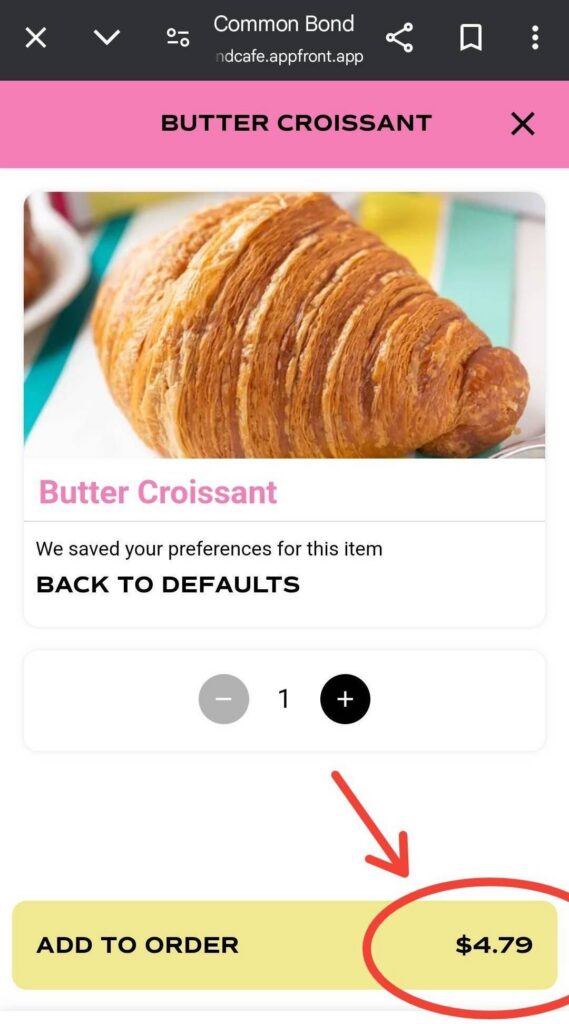
This morning, we walked to a completely organic bakery here in Toulouse. Their croissant? 1.40 euros.

At today’s exchange rate, that organic butter croissant costs $1.53 — less than half the Houston price. 😯
The Pattern Holds Across the Board
That croissant isn’t an anomaly. The same dynamic plays out across most of daily life in France:
Cell phone: In the US, we paid $97 per month for one phone with limited data. Here in France, we pay 20 euros ($21.92) per month for a plan with generous data and international calling.
Healthcare: Our total out-of-pocket healthcare costs for all three of us runs just over 100 euros per month (that doesn’t include what we pay in social contributions, we’re talking about out-of-pocket costs after taxes). That includes our mutuelle — the supplemental insurance that covers the small gap between what the French system pays and the full cost of visits and medications. We pay around 1,300 euros per year for excellent healthcare, including eyeglasses and dental for the whole family.
The euro-to-dollar rate could shift even further, and between healthcare savings alone, living here would still make more financial sense for us.
How We Manage Currency Fluctuations
Using funds in one currency while living in another is always a little tricky. You’re tied to two economies that can each move in ways that affect your budget.
Here’s how we handle it:
We convert dollars to euros regularly using a dollar-cost averaging approach — spreading conversions over time rather than making one big exchange. Since we’re in this for the long haul, this smooths out the ups and downs over time.
We also build a 20% buffer into our budget for exchange rate shifts. When fluctuations happen, we’re not panicked — we’ve already accounted for them.
Tools Worth Playing With
If you’re trying to compare your current city’s cost of living to a potential home in France, a cost-of-living calculator can be a helpful starting point (just keep in mind these tools rely on crowd-sourced data, so smaller cities may have thinner samples).
And if you’ve never explored The Earth Awaits, it’s genuinely fun. Plug in your budget and lifestyle preferences and it shows you cities around the world where you could realistically afford to live. To focus on France without getting overwhelmed, uncheck everything except “Europe.”
Have fun exploring.
Baguettes and Butter 4eva, Raina❤️
