


Beyond the farmers’ market: a guide to the marchés nocturnes, gourmands, brocantes, and vide-greniers that make French community life so special.
France is famous for its farmers’ markets — and with good reason. They really are as wonderful as everyone says: overflowing with fresh, high-quality food at genuinely reasonable prices. Every Thursday when we shop the weekly market in Eymet, I have to pinch myself. I live in France.
I love the atmosphere. Friends stop mid-street to exchange bisous. Our favorite farm lady laughs as she hands over armfuls of gorgeous tomatoes. The briny smell of olives drifts from the Moroccan vendor’s stall. It’s vibrant and alive in a way that’s hard to describe until you’ve been in it.
But once you’re here — especially in spring and summer — you’ll start spotting signs for all kinds of other markets too. Some on hand-lettered posters, some taped to lampposts. Here’s a guide to what each one is, and why you shouldn’t miss them.
Market type 1
Marché de Producteurs – The farm-direct market
These markets are reserved exclusively for sellers who grow or make what they sell — and usually hyper-locally. No imported Spanish melons here. Think honey from the next village, potatoes from a nearby family farm, cheese from someone who actually knows the goat by name. If you’re settling into the region and want to support local agriculture directly, the marché de producteurs is your market.
Marché nocturne – The night market
Running mostly in July and August, these festive evening markets blend food stalls, local artisan vendors, games for kids, and often live music. Come for the vibe, not the groceries.
In Eymet, our Tuesday night marché nocturne is a true summer highlight. Local bars pause kitchen service and welcome patrons to bring food from the market stalls — as long as you order drinks at the bar. Restaurants stay open too. The whole town square fills up, and the evening takes on a wonderfully spontaneous energy.
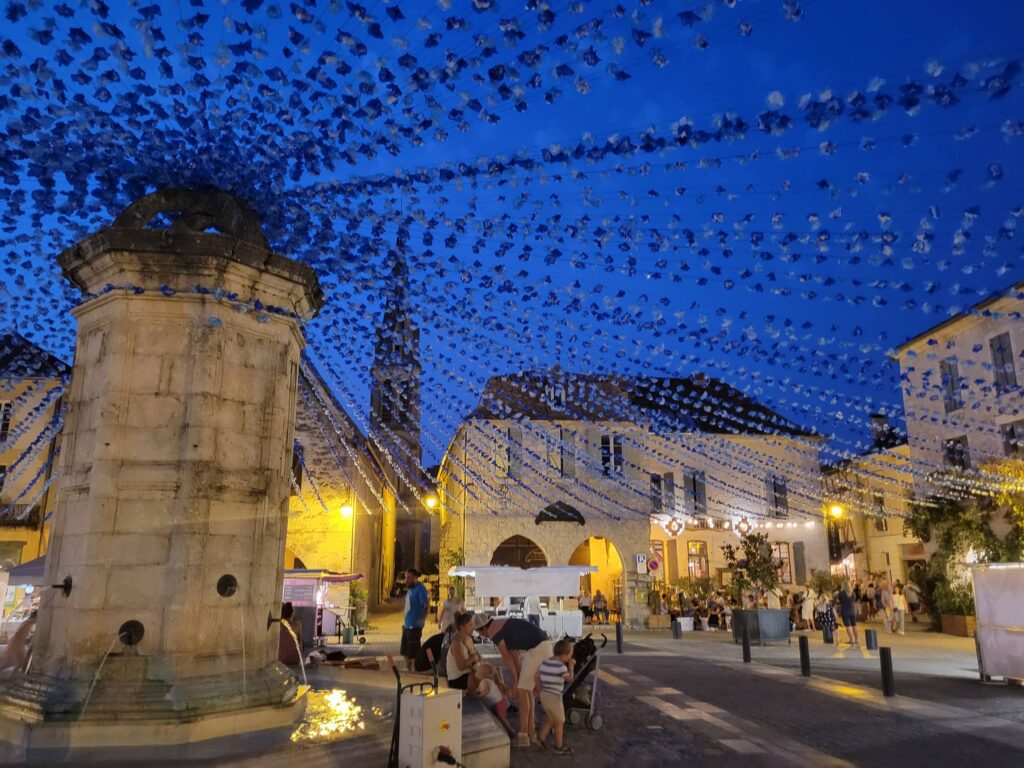
Night Market – Eymet, Summer 2023
Marché Gourmand – The village dinner party
This one is my favorite, and it’s mostly a Southwest France thing (I think? Our Parisian and Northern French friends had never seen this). A marché gourmand feels less like a market and more like an entire village sitting down to dinner together.
Long communal tables stretch through the center of town. When you arrive, you claim a spot with your own tablecloth and place settings — yes, bring those, though never bring your own food. Then the evening unfolds in a beautiful, meandering way: wander to a food truck for your entrée (what Americans call an appetizer — in France, the entrée is the first course), grab a bottle of wine, settle in to eat and chat with whoever’s sitting nearby. Then head back out for your main course, maybe another bottle of wine, then dessert. Most villages sell bread and water at their own stand for a couple of euros. After dinner, live music starts up — and these evenings routinely turn into dance parties that run until midnight, with people of every age on the floor.
I look forward to them all year.
Pro tip: Most villages host marchés gourmands on warm Friday or Saturday evenings from June through September. Check with the local tourist office or watch for posted signs — they don’t always make it onto the internet.
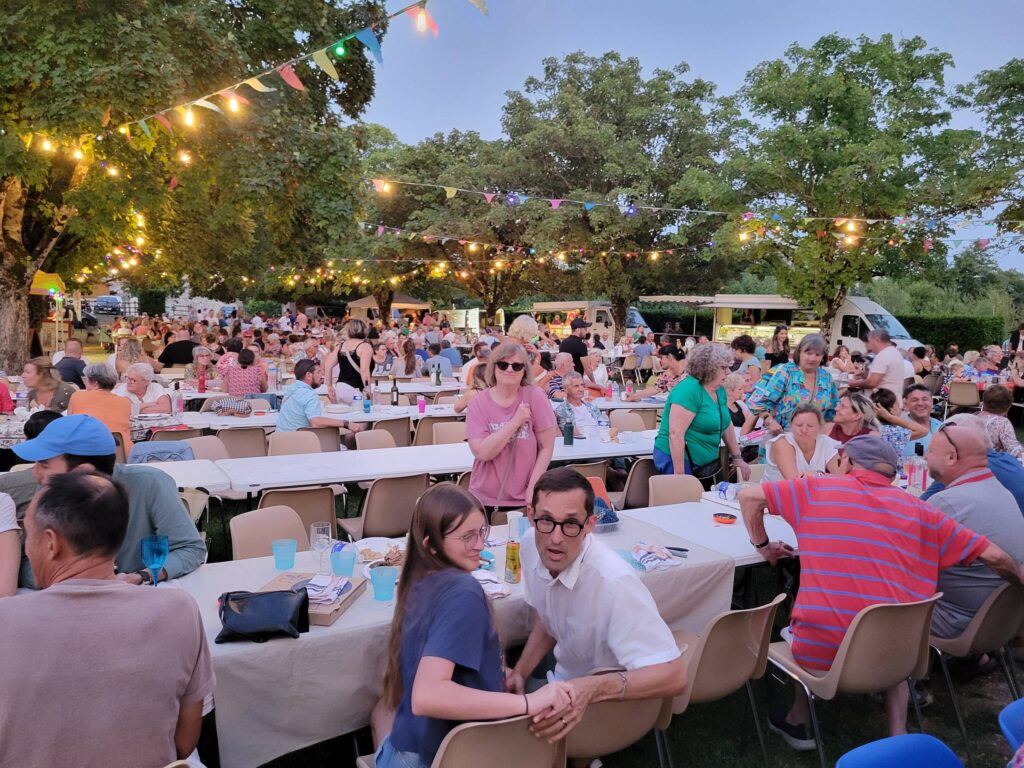
Dinner tables at a Marche Gourmand
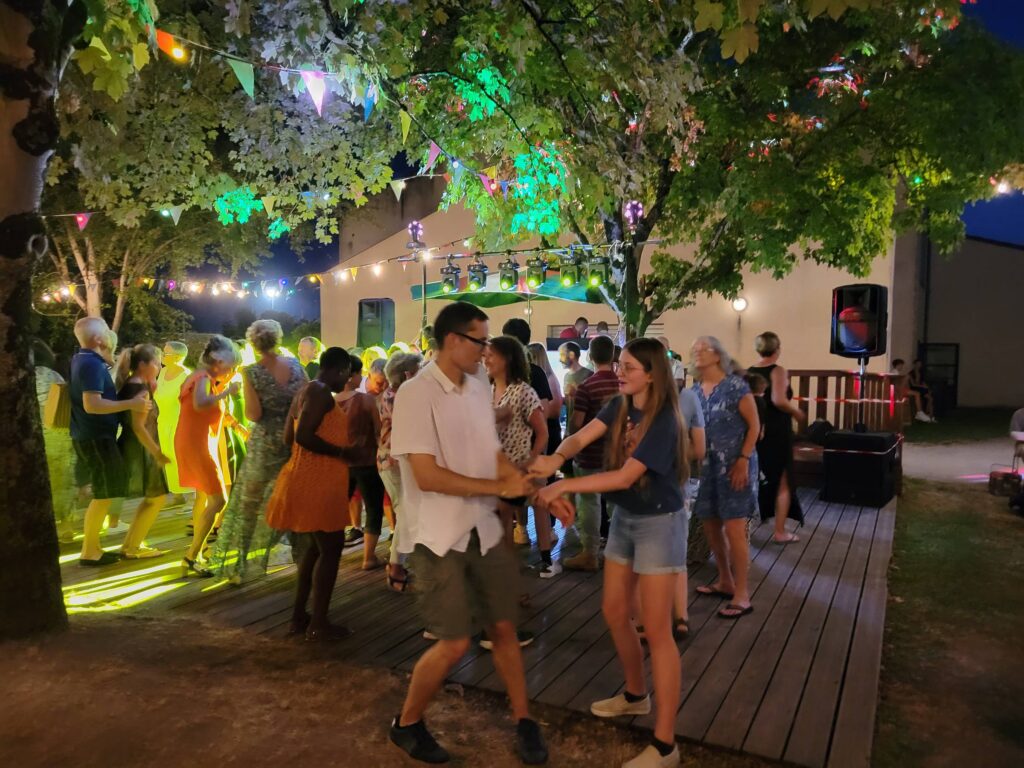
Dance party time after dinner at a Marche Gourmand
Brocante – The antique flea market
A brocante is France’s version of an antique market — more curated than a typical flea market, with professional sellers and prices to match. That said, finds are still generally reasonable, and the quality can be extraordinary. Bordeaux hosts a massive brocante twice a year, in spring and winter, and while it’s not cheap, the treasures make it well worth the trip.
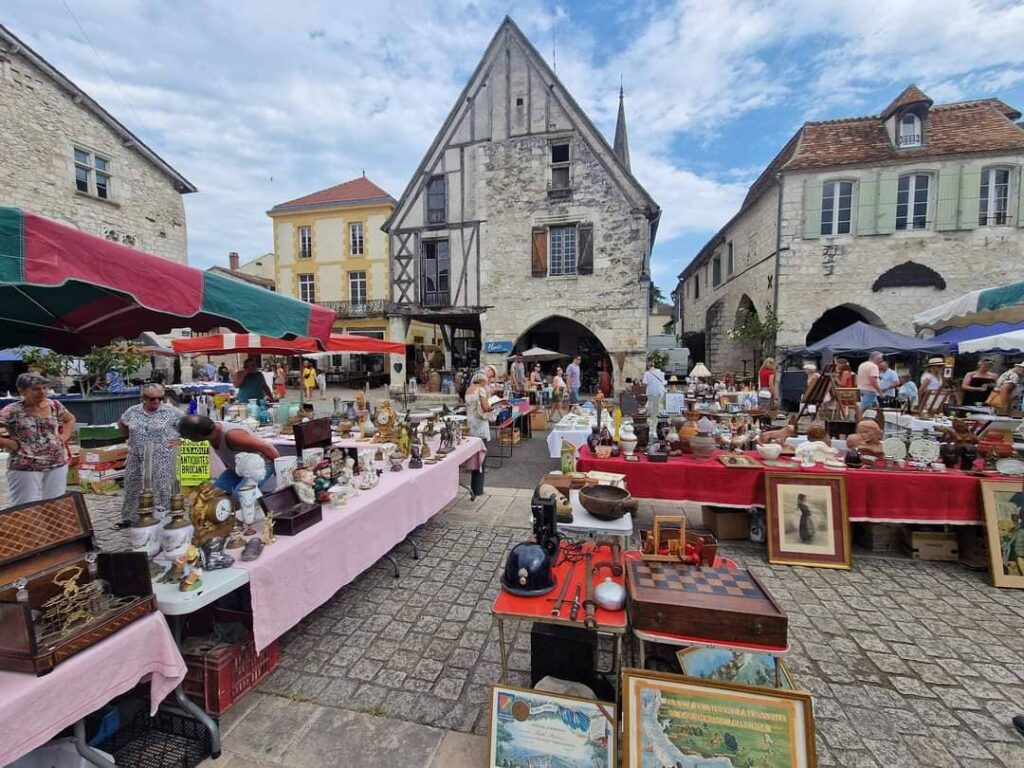
Brocante on the square, Eymet
Vide-Grenier – The village garage sale
The name means “empty attic,” and that’s exactly what it is. Individual yard sales don’t really exist in France the way they do in the U.S. — instead, entire villages host communal vide-greniers a few times a year, where anyone can rent a table and haul out their cast-offs. Just like back home, you never know what you’ll find. But the deals are absolutely there if you’re willing to dig.
How to find them
Keep your eyes open for hand-lettered signs posted around town — that’s genuinely how most of these markets announce themselves locally. You can also check with the nearest tourist office, or search the name of your village plus “marché gourmand” or “vide-grenier” and the current month. They don’t always have a big web presence, which is half the charm.
Each of these markets offers a window into the heart of French culture — where food, community, and joy come together in a way that makes you understand, almost immediately, why people fall so hard for this country.
Baguettes and butter 4eva— Raina❤️
