


Since moving to France, I’ve noticed I instinctively try to understand new things by comparing them to the American version. I know, it’s not always a fair comparison. But when we acquire new knowledge, it’s natural to file it alongside what we already know, at least until we understand better.
So when I first heard people mention an ostéopathe, I mentally filed it somewhere near “doctor.” A sage-femme became a midwife. A podologue became a podiatrist. Each of these shares something with its closest American counterpart, but none of them are quite the same.

Ostéopathe: More Than a Chiropractor
The ostéopathe is usually the first person most French people call for almost any pain they suspect is musculoskeletal or functional. Think: chiropractor, physical therapist, and massage therapist rolled into one, plus a little more.
Ostéopathes are highly trained manual therapists with five years of study behind them. They take a holistic, systemic approach to figuring out why you’re in pain before they treat anything. Sometimes the answer is something simple but overlooked, like glasses that need adjusting to relieve neck pain. From there, they either treat you directly or refer you to the right specialist.
The national health plan (Sécu) doesn’t usually cover them, but your mutuelle top-up insurance sometimes does. You don’t need a doctor’s referral to see one.
Jason saw one in Bergerac after injuring his shoulder. Her exercises and manual work helped significantly, and while he did eventually need a steroid injection from an orthopedic surgeon, I credit the ostéopathe’s program with helping him regain his full range of motion. His visit cost 50 euros.

Sage-Femme: Far More Than a Midwife
I always saw sage-femme translated as “midwife,” and since I’m not having any more babies, I assumed this was one professional I’d never need. I was wrong.
When I was struggling to find a new OB-GYN for routine preventive care, a friend asked, “Why don’t you just see the sage-femme in town?” It turned out to be exactly the right suggestion.
In France, sage-femmes are much closer to women’s health nurse practitioners in the U.S. Yes, they can deliver babies, but they also handle routine preventive care, birth control, STD treatment, vaccinations, pelvic floor rehab, perimenopause support, and really, women’s health across a lifetime. In smaller towns, they’re often much easier to get an appointment with than an OB-GYN.
I recently started seeing one in Bordeaux and I’ve been genuinely impressed with her care.
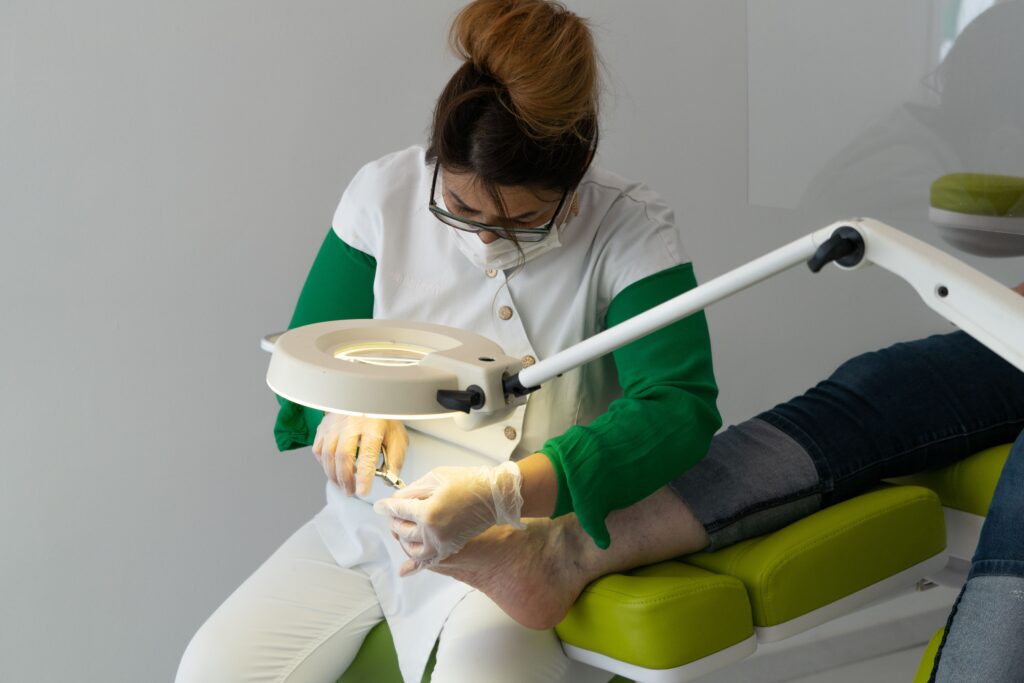
Podologue: Medical-Grade Foot Care
In the U.S., a pedicure is a spa experience. In France, salons mostly offer something called beauté des pieds, cosmetic foot care that tidies up and paints your toenails. Some spas add a scrub or short foot massage, but in my experience it doesn’t quite compare to a full American spa pedicure.
A podologue is something different altogether. They offer a medical pedicure that actually gets your feet in shape: removing dead skin and calluses, treating ingrown toenails, and evaluating foot pain. They can also fit you for orthopedic shoe inserts if you need them. For certain conditions, national health coverage applies.
Valerie from Delightfully Disoriented recently wrote a great article about her experience at the local podologue, worth a read before your first visit.
What They All Have in Common
Looking at these three professions together, a pattern emerges: the French healthcare system genuinely values keeping people active, pain-free, and healthy through prevention and hands-on care. These aren’t last resorts, they’re first calls.
It makes me feel grateful to be here.
Baguettes and Butter 4eva, Raina ❤️

